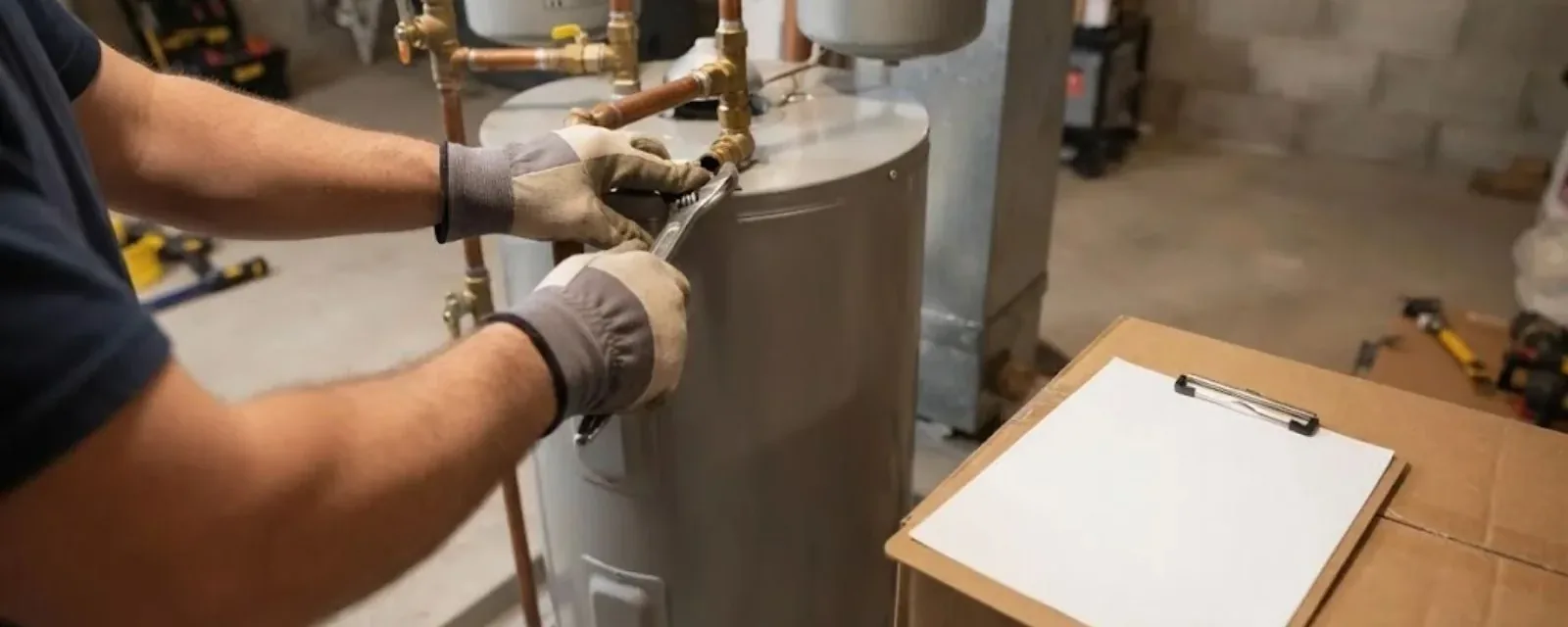
Water heater repair in Lawrence, MA starts with one question: is water coming out of the tank, or is the heat just gone? A puddle needs fast action, and our 24/7 dispatch line is open for exactly that call. Shut the cold supply valve on top of the heater, switch the breaker off or set a gas unit to pilot, and keep people away from wet floors.
A water heater is a storage tank with a heat source, a relief valve and two pipes. Most failures trace to one of those parts.
When a leaking water heater is an emergency
Water pooling under a tank gets worse, not better. A pinhole in a rusted shell can go from a damp spot to a steady stream in hours. A finished ceiling or a neighbor's unit below raises the stakes. If the puddle is growing, call the dispatch line, day or night.
A drip at the top of the heater is a different story. It is often a loose fitting or a weeping relief valve, and a same-day visit is usually enough. Repairs follow the Massachusetts plumbing code, 248 CMR 10.00, including the standards for relief valves and discharge piping.
Signs that point to a failed tank
Water seeping from the bottom seam, rust-colored streaks down the jacket, or a tank that rumbles and sweats along the lower third all suggest the steel liner has given out. A failed tank cannot be patched. The honest repair is a replacement, and we will tell you that before any work starts.
While you wait for the plumber
These steps limit damage and keep everyone safe.
Close the cold supply
Turn the shutoff valve on the cold pipe entering the top of the heater a quarter turn past snug. If it will not move, use the main shutoff at the water meter instead.
Kill the heat source
For an electric unit, switch off its dedicated breaker. For gas, turn the control dial to pilot or off. Never leave a dry-fired element or burner running.
Protect what is nearby
Lift boxes, rugs and stored items off the floor. Unplug anything on the floor near the water and stay out of standing water if outlets sit low.
Gas smell means leave
If you smell gas, do not touch switches or phones inside. Leave the building, call 911 from outside, then call Eversource Gas at (800) 525-8222 before you call a plumber.
If water keeps running after the valve is closed, tell the dispatcher so the plumber brings the right parts.
Tank leak or loose fitting: how we tell the difference
Water travels along pipes and jackets before it drips, so the wet spot on the floor rarely marks the source. A plumber dries every fitting, then watches each one under a flashlight until the first bead returns.
The relief valve gets special attention. A temperature and pressure (T&P) relief valve opens when the tank gets too hot or the pressure climbs. Massachusetts plumbing code calls for a full-size discharge pipe ending within 12 inches of the floor, with no shutoff valve in it.
Never cap a relief valve discharge to stop a drip. Call us and leave the pipe open.
No hot water or lukewarm water: what usually fails
The cause depends on the fuel and the age of the unit.
Failed heating element
Electric tanks have an upper and a lower element. When one burns out you get a short supply of hot water, then lukewarm. Elements are inexpensive parts and a common repair.
Tripped limit switch
A high-limit reset button trips when the tank overheats. If it trips again after you press it, a thermostat or element is likely stuck on, and the unit needs a plumber.
Pilot or igniter trouble
A gas unit with a dead pilot, a dirty thermocouple or a failed igniter will not fire. Cleaning or replacing that part often restores heat. We do not relight a unit that smells of gas.
Sediment in the tank
Mineral grit settles on the bottom, insulates the water from the burner and makes the tank rumble. Flushing helps in early stages, but a tank full of hardened scale may not recover.
Heat that fades over weeks points toward an aging thermostat. Heat that vanishes at once points toward a power, gas or control failure.
Gas, electric or hybrid: repairs differ by fuel
We ask early which kind you have, because it decides the parts, the safety steps and the permit question.
Gas storage units
Gas heaters add a burner, a gas control valve, a flue and a draft hood or powered vent. Work on any of those is gas fitting, which only a licensed gas fitter may do in Massachusetts. If a flue looks rusty, sooty or loose, we stop and tell you, because carbon monoxide is a real risk with a damaged vent.
Massachusetts requires a carbon monoxide detector on the same floor as a replaced gas appliance and on each habitable level.
Electric storage units
Electric tanks fail at the elements, thermostats and wiring connections. These are quick repairs when the tank is sound. The breaker goes off first, and we confirm the unit is dead with a meter.
Hybrid or heat pump units
Hybrid water heaters add a compressor, a fan and a condensate drain to an electric tank. Common faults include a clogged air filter and a blocked condensate line. A bill that suddenly jumps can mean the compressor has stopped and the elements are doing all the work.
Tank leaking or the shower gone cold?
Call the dispatch line and tell us the fuel type, the age of the heater and where the water is showing. We will talk you through the shutoffs while we line up a plumber.
Fix it or retire it: an honest look at the trade-offs
Repair is right more often than people expect, except when the tank itself has failed.
Repair usually makes sense when
- The tank is dry and the leak is at a fitting or valve
- A single part such as an element, thermostat or igniter has failed
- The heater is in its middle years and has been drained now and then
- Heat loss started suddenly rather than slowly over months
Replacement usually makes sense when
- Water is escaping through the tank wall or a lower seam
- The heater is well past its expected life and parts keep failing
- A thick layer of sediment keeps returning after flushes
- Venting or code issues make the existing setup hard to bring up to date
If your heater is near the end of its life, our page on water heater replacement covers sizing and next steps.
How the fault gets found
A diagnosis follows the same order every time.
Read the nameplate
The label gives the fuel, capacity, age and model, which tells us whether a part exists and is worth buying.
Test, do not guess
A multimeter checks elements, thermostats and power at the unit. A manometer or combustion check handles gas pressure and venting on gas models.
Check pressure and temperature
A gauge on a hose bib shows household water pressure. A thermometer at a nearby tap shows whether the setting is within the 130 degree residential limit.
Explain before we start
You hear the finding, the options and the price before any part is ordered.
Hot water in Lawrence rentals and older buildings
About 72 percent of Lawrence housing is renter-occupied, and about 28 percent of units sit in buildings of three or four units. One water heater may serve several families there. Massachusetts sanitary code expects landlords to supply hot water between 110 and 130 degrees, and going 24 hours or more without adequate water is treated as a health and safety problem. A rental owner should call the same day.
The annual water quality report for the Lawrence Water & Sewer Department does not list hardness, so test your tap if you see white scale on fixtures or a noisy tank. Scale on a tank bottom shortens heater life, and a plumber can tell you from the sediment what to expect.
Source type: Massachusetts plumbing code (248 CMR)
What decides the price of a water heater repair
We give you a clear price before work starts. These are the factors that move it.
Water heater repair questions from Lawrence homes
Yes. The dispatch line runs 24/7, and a leaking or failed heater is exactly the kind of call we take at midnight. Same-day appointments are offered when the schedule allows, and the dispatcher will tell you what to shut off while a plumber is lined up.
Water at the base can come from the drain valve, a lower fitting, condensation, or the tank itself. If the seam or the tank wall is weeping, the steel has corroded through and the tank needs replacing. A plumber dries the unit and traces the first drip to be sure.
It can be a warning. The T&P valve opens when pressure or heat gets too high, so a constant drip may signal a worn valve, high pressure or a closed plumbing system. Do not cap the pipe. Call us and keep the discharge line open.
Leave the building at once. Do not flip switches or use a phone inside. Call 911 from outside, then call Eversource Gas at (800) 525-8222. Only after the gas company clears the house should you call a plumber.
A broken dip tube, a failed lower element or heavy sediment is often the cause. A heater that is too small for the household can act the same way.
A yearly flush often helps remove loose sediment, particularly on older tanks. If the drain valve is clogged with scale, forcing it can cause a leak, so let a plumber handle it. Ask for a relief valve and anode rod check on the same visit.
Often yes. Filters, condensate drains and error-code faults are common and fixable. Mass Save lists rebates for qualifying heat pump models, so check masssave.com if you replace instead.
Plumbing and gas fitting work that is replaced or repaired needs a permit from the local inspector. For a specific repair, ask the local plumbing inspector at Inspectional Services, 978-620-3130, and your plumber can handle the paperwork.