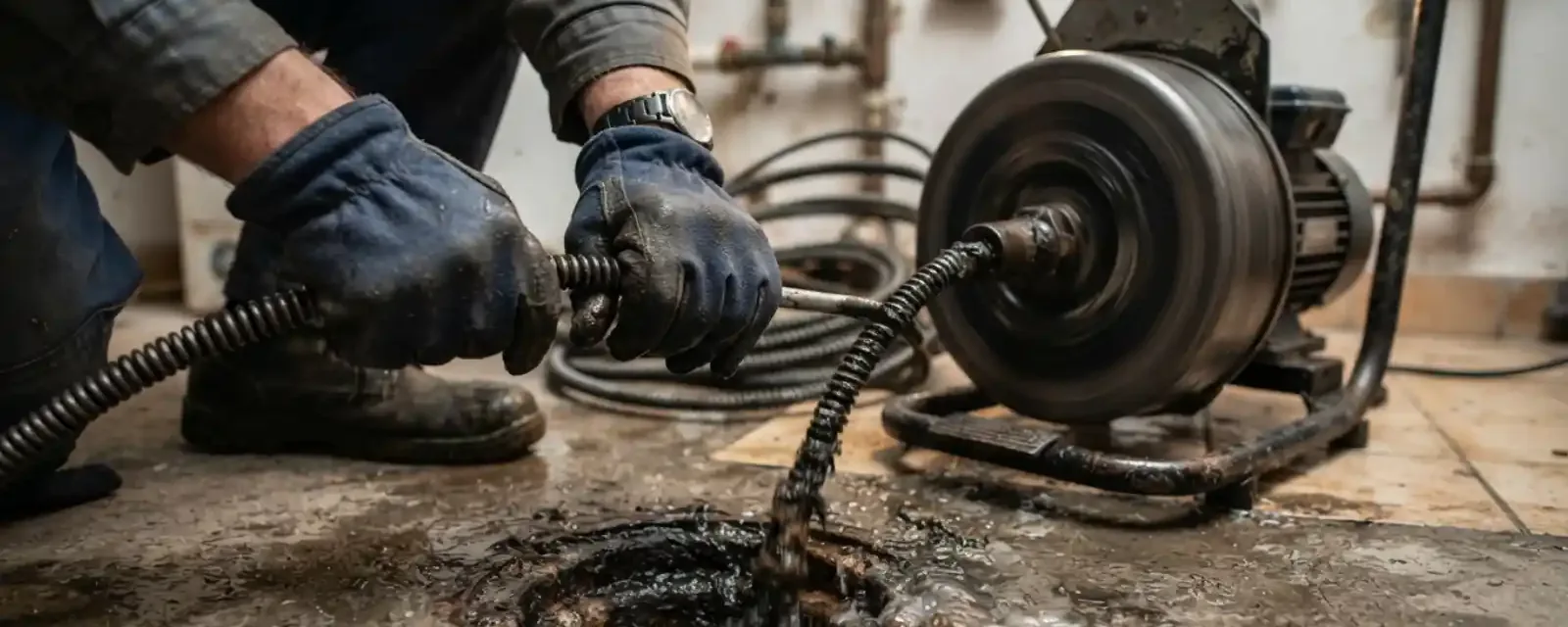
Water that will not go down is stressful, and it gets worse every time someone flushes or runs the tap. Our 24/7 dispatch line is open for drain cleaning in Lawrence, MA, and licensed, insured plumbers can often come the same day when the schedule allows. While you wait, stop using the fixture and the ones near it, and keep water out of the drain.
Drain cleaning means removing whatever is blocking a drain line, usually with a cable (a snake) or a high-pressure water jet. The cause might be a kitchen grease plug, a tangle of hair in a tub line, or a blockage in the stack shared by several apartments.
When a clogged drain is an emergency
Most clogs are a nuisance. A few are urgent. A single slow sink can wait for a planned visit, but a blockage that sends water onto the floor, or into more than one fixture at once, should not.
Treat it as an emergency when a toilet bubbles while you run the sink, when a basement floor drain is rising, or when dirty water appears in a tub after someone uses the washer. Those signs often point to a blockage past the individual fixture, and sometimes in the line that leaves the building. If that sounds like your house, read our page on sewer line cleaning too.
When it can wait for a normal appointment
One slow bathroom sink, a tub that drains in a lazy swirl, or a kitchen sink that clears after a plunge is usually a local buildup. Book a same-day or next-day visit and avoid pouring anything harsh down the line in the meantime.
Kitchen sink clogs: grease, food and a long run to the stack
Kitchen lines clog differently than bathroom lines. Cooking fat cools inside the pipe, coats the walls, and then catches rice, coffee grounds and vegetable peels. A line that drained fine in spring can narrow all year until a double sink backs up on a Sunday afternoon.
In older multi-unit buildings the kitchen branch can run a long way before it meets the stack, and it may have several bends. That is one reason a hand plunger gives up. A cable with the right head can break through the plug, and a jet can scour the grease off the pipe wall so it does not rebuild in a month.
Garbage disposals add their own wrinkle. If the disposal hums but the sink stays full, the blockage may sit just past the trap, not in the disposal itself. We check both before quoting. If the unit itself is failing, see garbage disposal repair.
Snaking and cabling: what the cable can and cannot do
A drain cable is a coiled steel line on a motorized drum. The plumber feeds it into a cleanout or through the trap, and the spinning head bores through the obstruction or hooks it so it can be pulled back. Cables come in different thicknesses, and matching the size to the pipe matters. A cable too small for a four-inch line just punches a hole through a plug and leaves the rest behind.
Cabling works well on hair, soap scum, paper and soft grease. It struggles with heavy scale, a collapsed section, or roots. If the cable stops at the same spot twice, or comes back with pieces of clay or rust, that is a sign to look inside the pipe with a camera instead of cutting again.
Clearing a clog is one of the few plumbing jobs that does not need a permit in Massachusetts. Work that changes or replaces drain piping is different, and it needs a permit from the local inspector. We will tell you which one your job is before work starts.
Which drain is blocked? Clues from what the house is doing
Where the water backs up tells a plumber where to start. Use this as a rough guide, not a diagnosis.
| What you notice | Likely location | Usual first step |
|---|---|---|
| One sink or tub is slow | That fixture's trap or branch | Cable through the trap or an access point |
| Kitchen sink full, dishwasher backs up | Kitchen branch or shared drain past the trap | Cable, then jet if grease keeps returning |
| Two or more fixtures slow on one floor | Shared branch or stack | Cable from a cleanout, camera if it repeats |
| Toilet gurgles when the sink drains | Main drain or stack venting issue | Camera or main-line cable |
| Floor drain in the basement rises | Main drain or lateral | Main-line clearing, then inspection |
Several fixtures on different floors acting up together points to the stack or the main, not to separate small clogs.
While you wait for the plumber
A few quick steps can limit the mess and make the visit faster.
Stop adding water
Skip the washer, dishwasher and showers. Every gallon you send down a blocked line has to go somewhere.
Do not mix chemicals
Pouring a second cleaner on top of the first can create fumes and splash hazards. Tell the plumber what you already used.
Clear the area
Move rugs, boxes and stored items away from floor drains and below sinks, and keep children and pets back from standing water.
Find the cleanout
If you know where the cleanout cap is, uncover the path to it. In a multi-unit building, ask the landlord or neighbors which unit has access.
If wastewater is coming up through a floor drain or toilet, treat it as contaminated and keep it off skin.
Backed up now? Call the 24/7 line
Tell the dispatcher which fixtures are affected and whether water is rising. That sets up the right cable and the right plan.
Cast iron and old drain lines in Lawrence's older buildings
The city's housing plan reports that 53 percent of Lawrence's homes were built in 1939 or earlier, and about 83 percent before 1979. Many of these are triple-deckers and two-families. Pipe materials by era are not published for Lawrence, but homes of that age commonly have some cast iron, and older cast iron can scale on the inside until a cable only opens a narrow path.
Roughly 28 percent of Lawrence units sit in buildings of three or four units, so one stack often serves several apartments. A clog low in that stack can back water into the ground-floor unit while the upstairs tenants see nothing. That is why we ask which floors are affected before we pick up a tool.
If your pipe is flaking or the cable keeps dragging out rust, ask for a camera look before more cabling. See sewer camera inspection for what the footage shows.
How we find and clear the blockage
The method depends on the symptoms and what the pipe looks like inside.
Ask and test
We run water at the fixtures you list, watch the drain speed, and listen for gurgles to narrow the location.
Choose the entry point
A trap, a cleanout or the roof vent. The best entry point lets the cable reach the blockage without bending around fixtures.
Clear and confirm
We cable or jet the line, then run water for several minutes to confirm it drains freely.
Look again if it recurs
A camera shows whether the pipe is scaled, cracked, offset or invaded by roots, so you can decide on a repair.
Cable now, jet later, or fix the pipe
Each option fits a different problem. A good plumber tells you which one you are buying.
Cabling (snaking)
- Quick, good for soft clogs and a single branch
- Opens a hole but may leave grease on the walls
- Weak against roots and heavy scale
Jetting or repair
- Hydro jetting scours the whole pipe wall for repeat clogs
- Needs a sound pipe, so a camera may come first
- Cracked or collapsed pipe needs sewer line repair, not more clearing
If the same drain clogs again within weeks, stop paying for repeat cabling and ask what the pipe looks like inside.
Drain line leaks and renters
A drain line can leak at a joint without ever clogging. Signs include a damp spot under a bathroom, a musty smell near the stack, or a stain that grows after heavy use. Cabling will not fix a leak, and chemical cleaners can make it worse. Raise it early so the leak gets located before it rots a floor.
About 72 percent of Lawrence housing is renter-occupied. The state sanitary code puts the duty to provide and maintain a working drainage system on the owner, so tenants should report a recurring backup to the landlord in writing. We can send the landlord a plain note of what we found if you ask.
What affects the cost of a drain cleaning visit
We give a clear price before work starts. These are the things that move it.
Drain cleaning questions from Lawrence homes
Yes. Our dispatch line runs 24/7, and licensed plumbers take after-hours calls for backups that cannot wait. We do not promise an arrival time, but the dispatcher will tell you what to do while the visit is arranged.
You can, but it often fails on grease or roots and leaves caustic water in the pipe. That is a hazard for whoever opens the trap next. Tell the plumber what you used, and never mix products.
If only one fixture is slow, it is probably local. If a basement floor drain rises, toilets gurgle, or fixtures on several floors slow down together, suspect the main line. Our sewer line cleaning page covers that case.
A floor drain connects low in the system, so it shows trouble first. It can be a blocked trap, a clogged branch, or a restriction in the main drain. We clear the drain and check whether other fixtures are affected.
A French drain is a perforated pipe in gravel that carries groundwater, and it is not a household drain line. A cable may clear a section, but silt often returns. If water is entering your basement, see basement water control.
Usually not. Hair and soap build up in the stopper area and the trap. Book a normal visit and avoid pouring chemicals. If the tub and toilet also slow down, call sooner.
Clearing a blocked drain does not need a permit in Massachusetts. Repairing or replacing drain piping does, and the permit comes from the local plumbing inspector. We tell you which category applies before work starts.
Yes. We serve nearby towns, including Methuen and North Andover. Same-day availability depends on the schedule.