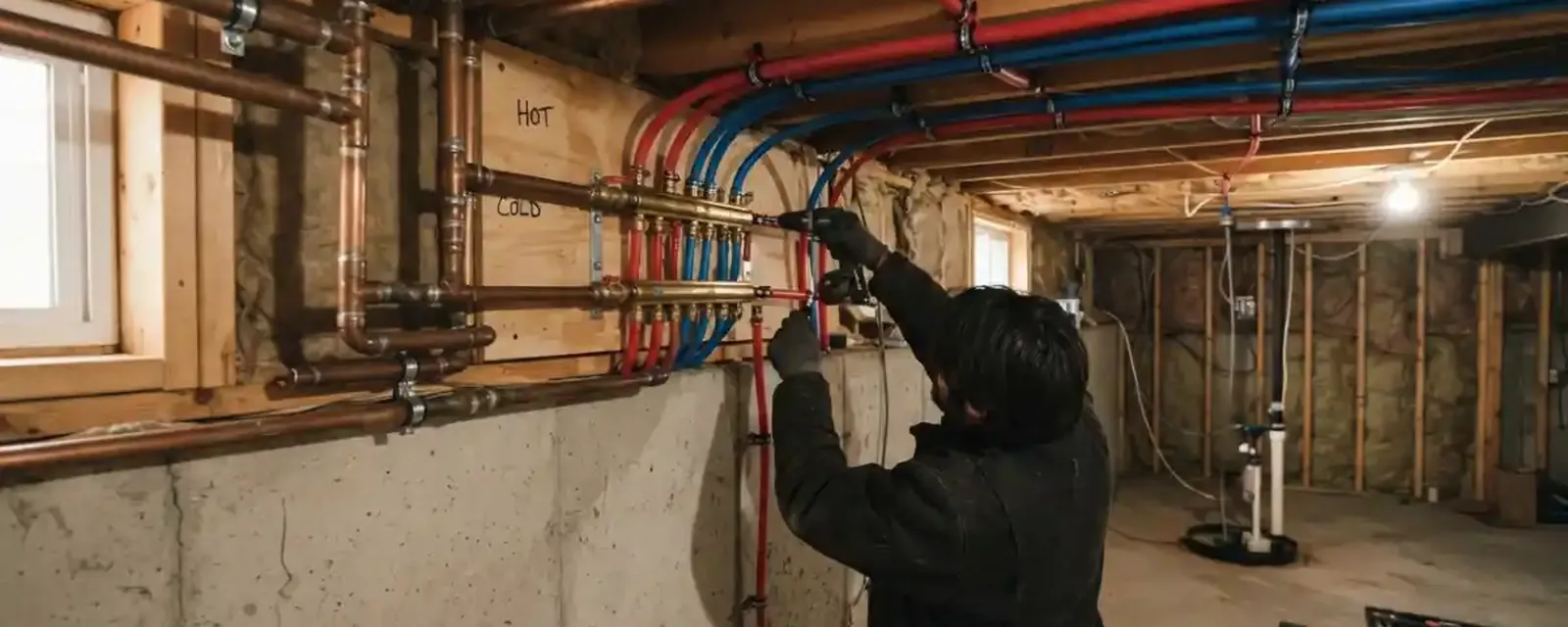
Brown water from the tap after it sat overnight, a second pinhole leak in the same year, a shower that has slowly lost its force. Any of these can mean the supply pipes themselves are wearing out.
Repiping in Lawrence, MA is the planned replacement of the water supply lines inside a building, either all of them or one worn run. It differs from a single repair because the aim is to stop the repeat failures.
Brown water, pinholes and pressure that fades: what it can mean
Pipes that corrode from the inside can shed rust that turns water brown or orange, build scale that narrows the bore, and thin until a pinhole opens. The technical answer is repiping, but the symptoms alone do not prove it. A single pinhole in an otherwise sound line is just a repair.
A quick check helps separate causes. Run cold water at two or three fixtures in different parts of the building. If only one runs discolored, the problem is likely local to that branch. If all do, the issue is either the service line, the main or the whole system, and a plumber should look. A repipe is built to the Massachusetts plumbing code (248 CMR 10.00), including the pipe-material and support standards the inspector checks.
Signs that point to repiping instead of another patch
- Pinhole leaks that keep appearing on different parts of the same run within a short time.
- Rusty or metallic-tasting water that clears slowly after running the tap.
- Pressure that is weak at several fixtures but normal at the meter.
- Green or white crust at fittings, or flaking along threaded joints.
- Repairs where new pipe is joined to old and the old section fails next.
- Water stains on ceilings below bathrooms that return after repairs.
If you are seeing water now, start with leak detection or a burst pipe repair visit. Repiping is the planned follow-up.
Older housing, shared risers and the rental question
The city's housing plan reports about 53 percent of Lawrence housing units were built in 1939 or earlier and about 83 percent before 1979. The plan also says about 72 percent of units are renter-occupied and 28 percent sit in three- or four-unit buildings. For you, that means many buildings may have older plumbing, shared risers and one owner deciding for several households, so scheduling matters.
The housing documents do not say what pipe materials were used in which decade, so we do not assume. We check each building: look at the pipe, the fittings and the age of past repairs, and tell you what is actually there before recommending a plan.
Galvanized, copper, PEX or CPVC: honest trade-offs
No material is perfect. Which one fits depends on the building, access and budget.
| Material | Strengths | Watch for |
|---|---|---|
| Galvanized steel | Rigid and commonly used in older buildings | Rusts from inside, narrows over time, repeated pinholes |
| Copper | Long track record, handles heat, works in exposed runs | Can pit in some water, needs soldered joints, more labor |
| PEX | Flexible, fewer joints, often easier to run through finished walls | Not for UV exposure, needs correct fittings and protection from rodents and pests |
| CPVC | Light, handles hot water, solvent-welded joints | Can turn brittle with age and heat, fittings must match the system |
Material choice is a judgement call. Ask the plumber to explain why one fits your walls and your hot water setup, and what the code allows.
How a repipe is planned and done
The work is staged so water is off for as little time as the building allows.
Assess the system
We trace the supply lines, test pressure at the meter and at fixtures, and look at fittings and shutoffs. We note what is accessible and what is not.
Choose the route and material
We lay out where new pipe will run, which walls or ceilings need openings and which runs can stay.
Pull the permit
Plumbing work that is replaced needs a permit from the local inspector, so we pull it before starting. Ask the local plumbing inspector for questions on scope.
Replace, test and inspect
New lines go in, shutoffs return to service in stages, and the system is pressure tested and inspected before walls are closed.
Permits and the Inspectional Services office
Massachusetts requires a permit from the local inspector before plumbing work is installed, altered, replaced or repaired, with narrow exceptions for minor leak repairs and clearing clogs. In Lawrence, Inspectional Services at 200 Common St, Room 209 (978-620-3130) handles permits, and there is an online portal. Ask for the permit number in writing, because it belongs on your records when you sell or insure the building.
Planning a repipe?
Call and describe the building, the symptoms and the units involved. We can book an assessment, same-day when the schedule allows.
Whole building or only the worst runs?
Replace everything
- Removes the cause of repeat leaks.
- One permit, one set of openings, one disruption.
- Makes sense when most runs show the same corrosion.
- Costs more up front.
Replace in phases
- Spreads cost over several visits.
- Lets you start with the leaking run or the kitchen stack.
- Mixes old and new pipe, so old sections may fail next.
- Needs a long-term plan so phases fit together.
Our water line repair page covers the buried pipe from the street, which is a separate project from repiping inside.
What decides the cost of repiping
Repiping questions from Lawrence owners
Not always. Test several fixtures. If only one runs brown, the problem is local. If all do, have a plumber check the service line and supply pipes. Ask Lawrence Water & Sewer at 978-620-3110 if your neighbors see it too.
It depends on building size and access, so we cannot promise a number. Work is staged so shutoffs return in sections. We explain the plan in advance, which matters in occupied triple deckers.
Massachusetts requires a permit from the local inspector for replaced or repaired plumbing work. Ask the local plumbing inspector about your scope. Lawrence Inspectional Services is at 978-620-3130.
PEX approved for potable use is widely installed, but it needs correct fittings and protection from sunlight. Ask the plumber for the specific product and its listing.
Yes, in phases. The tradeoff is that old sections can fail next. A written plan helps each phase tie in properly.
Sometimes. If scale or corrosion narrows the pipes, new lines can restore flow. A partly closed valve or a bad regulator is a cheaper fix, so we test first.