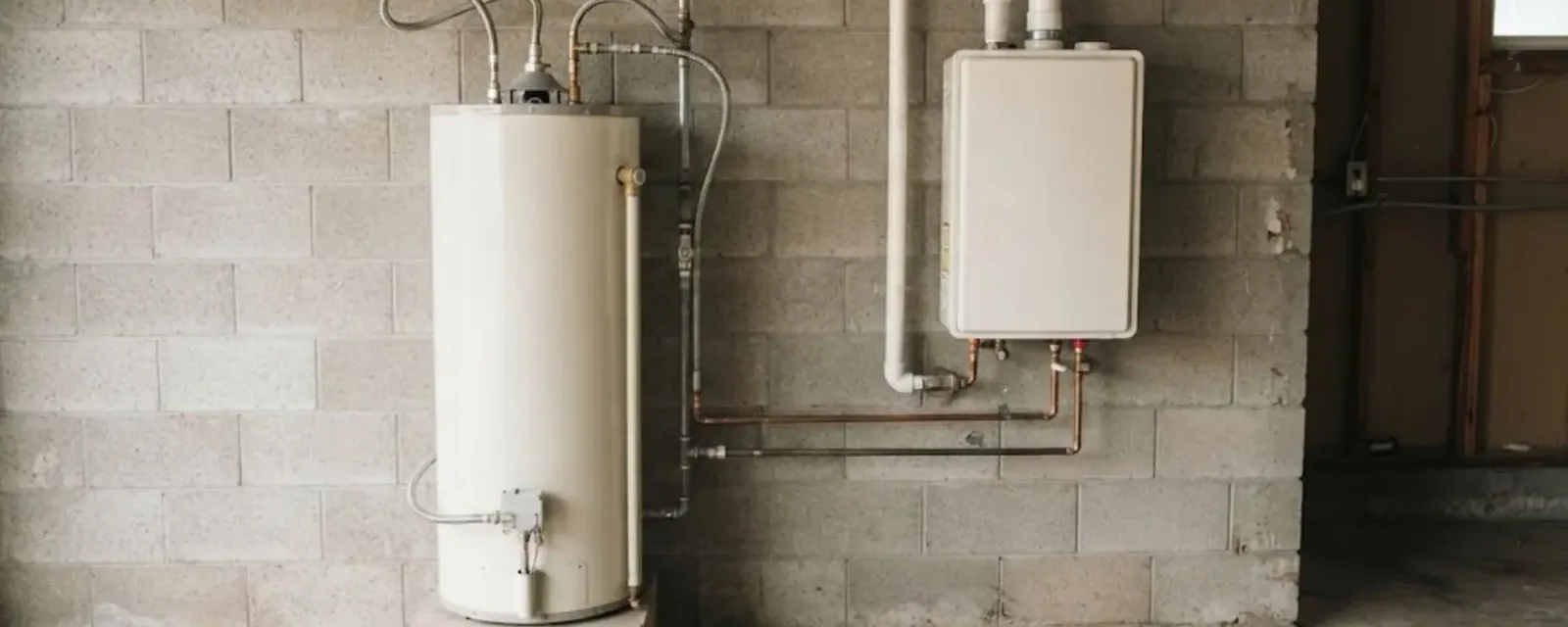
No, you cannot legally install a water heater yourself in Lawrence, MA. Massachusetts treats a water heater install as plumbing work, and that work must be done by a licensed plumber under a permit from the local inspector. Gas units add gas fitting rules on top. The state fact sheet offers no homeowner exemption.
That can feel like a rule built to cost you money. It is really about three things that go wrong in a basement: gas, carbon monoxide, and scalding or pressure. This post explains each risk, what you can prepare before the plumber arrives, and how to check that the person at your door is licensed.
Do it yourself or hire it out
A quick view of who may do what in a Lawrence home.
| Task | Homeowner | Licensed plumber |
|---|---|---|
| Flush sediment from the tank | Often fine if the unit stays in place | Also fine |
| Clear a clog or fix a minor leak | Permit-free | Also fine |
| Remove and replace the heater | No | Yes, with permit |
| Gas piping, venting, or shutoff work | No | Yes, with gas permit |
| Relief valve and discharge piping | No | Yes, to code |
| Choose the model and plan the space | Yes | Helps you decide |
Only minor leak repairs and clearing a clog are permit-free under the state rules.
Why the rules are strict for water heaters
Each part of an install can hurt someone if it is done wrong.
Gas and combustion
A gas heater needs correct gas piping, a sealed connection, and a vent that carries exhaust outside. Errors can leak gas or spill exhaust into the living space.
Carbon monoxide
Replacing a vented gas appliance requires a carbon monoxide detector on the same floor and on each habitable level. A plumber checks this as part of the job.
Pressure and heat
A temperature and pressure relief valve must have a full-size, unvalved discharge pipe ending within 12 inches of the floor. A blocked or missing line turns a hot tank into a hazard.
Scalding water
State code caps residential hot water at 130 F. Set above that, the water can burn skin quickly, especially for children and older adults.
None of these checks show up in a video tutorial. They show up when an inspector looks at the finished work.
What a permit actually does for you
The permit is a request to the local plumbing inspector to look at the work. It puts a second set of eyes on the gas connection, the vent, and the relief line. The inspector must respond to an inspection request within two working days.
In an emergency, a licensed plumber may start before the permit if the inspector is notified and inspects by the next working day. That is why a failed heater in January does not have to wait for paperwork.
Unpermitted work can also create trouble when you sell, refinance, or file an insurance claim. Ask your agent how your policy treats work done without a permit. The Massachusetts plumbing code, 248 CMR 10.00, sets the standards for relief valves and discharge piping that the inspector checks after installation.
Where homeowners get stuck
Most trouble comes from small things: a vent run that sags, a relief line capped to stop a drip, or a tank set on bare concrete with no drain plan. Those are exactly the details a licensed plumber is trained to catch.
Need a water heater installed?
Tell us the fuel type, the tank size, and where the heater sits. We will give you a clear price before work starts.
What you can do to prepare, legally
You can still save time and money by getting the space and the facts ready.
- Note the make, model, and fuel type from the data plate.
- Photograph the vent, the gas shutoff, and the pipes on top.
- Clear a three-foot path to the heater.
- Measure the doorway and stairs the new tank must pass.
- Ask whether your home needs a thermal expansion tank, since a meter or backflow device can make a closed system.
- Look into Mass Save heat pump water heater rebates on masssave.com.
- Confirm a carbon monoxide detector works on each level.
- Write down your questions about warranty and venting.
Mass Save lists rebates for qualifying heat pump water heaters installed by a licensed plumber. Check the current amount on the live page before you buy.
What Lawrence's inspectors and codes mean for you
In Lawrence, permits go through Inspectional Services at 200 Common St, Room 209, and the city has an online permit portal. The office line is 978-620-3130. Your plumber should pull the permit, but you can call to confirm it was filed.
The 2018 Merrimack Valley gas explosions are a reminder of why gas work gets extra scrutiny here. If you ever smell gas, leave, call 911 from outside, and then call Eversource Gas.
Source type: Mass.gov consumer guidance
How to check a plumber's license
Look up any plumber in eLIPSE, the state's online license system on Mass.gov, under Check an occupational board license. The Board of State Examiners of Plumbers and Gas Fitters licenses master and journeyman plumbers and gas fitters.
Ask for the license type that matches the job. A water heater swap in a gas home needs plumbing and gas fitting authority. Our water heater installation page explains how we handle new installs, and the water heater replacement page covers swapping an old unit.
Questions to ask before you hire anyone
Good answers come fast. Vague ones are a warning.
Strong answers
- Yes, I pull the permit and schedule the inspection
- Here is my license number for eLIPSE lookup
- I will install a relief valve and discharge line
- I will test the carbon monoxide detectors
- You get a clear price before work starts
Red flags
- We can skip the permit to save you money
- Cash only with no written price
- No license number offered
- Relief line capped or routed into a bucket
- Pressure to decide before you compare
Water heater install questions in Lawrence
Plumbing work in a home must be done by a licensed plumber under a permit, and the state fact sheet gives no homeowner exemption. Only minor leak repairs and clearing a clog are permit-free.
Your licensed plumber normally files it with Inspectional Services at 200 Common St. You can call 978-620-3130 to confirm the permit exists and ask about inspection timing.
Draining a tank to clear sediment is commonly done by homeowners when the unit stays in place. Work that removes, replaces, or changes the connections needs a licensed plumber.
Yes. Replacing a vented gas appliance requires a working carbon monoxide detector on the same floor and on each habitable level of the home. Your plumber should check them.
Call the 24/7 line. In an emergency a licensee may begin before the permit if the inspector is notified and inspects by the next working day.