Basement waterproofing in Lawrence, MA starts with a question: where is the water coming from? A damp wall, a white crust on the concrete or a musty smell can come from a leaking pipe, poor drainage, groundwater pressing on the foundation, or plain humidity.
A plumber can fix some of those causes and not others. We cover the plumbing and drainage side, and we say clearly when the fix is masonry or exterior grading work we do not do.
Damp walls, white crust and a musty smell downstairs
The white, powdery crust on block or concrete is called efflorescence. It is mineral left behind when water moves through the wall and evaporates. It tells you moisture is getting through, but not which of several sources is responsible.
A musty smell and a damp feel are the same story. The technical name for solving it is basement waterproofing, but the first job is diagnosis, because a dripping pipe and a wet foundation call for different trades.
What the signs usually point to
Where and when the dampness shows up is the best clue.
- Wet patches that appear only after rain or snowmelt often point to groundwater or surface drainage.
- Dampness that stays steady in dry weather can point to a leaking supply or drain line.
- A wet spot under a bathroom or kitchen above often means a fixture or drain leak.
- Moisture only near the floor edge can mean water rising through the slab joint.
- Condensation on cold water pipes and walls in summer is humidity, not a leak.
How we separate a plumbing leak from a wet foundation
We start with simple tests before anyone cuts into a wall.
Watch the water meter
With every fixture off, a meter that keeps moving suggests a leak somewhere in the pressurized lines.
Inspect pipes and fixtures
We check supply lines, the water heater, washing machine hookups and drain connections for drips and stains.
Test the drains
We run water and watch floor drains and drain lines, and may use a camera on a suspect line.
Check the sump and drainage
We see whether a pit is present, working and discharging away from the house.
Why older Lawrence basements run damp
The city's housing plan shows that about 83% of Lawrence housing was built before 1979, and 53% in 1939 or earlier. Older foundations were often built for a different standard of dryness, so ask any contractor how they will handle moisture before promising a dry result.
Frost depth in Massachusetts code is 48 inches, and Lawrence gets roughly 41 to 49 inches of precipitation a year. That much water, plus freeze and thaw, is why seasonal dampness is common and why drainage around the house matters.
Source type: City of Lawrence Housing Production Plan
What a plumber does and what is masonry work
Being clear here saves you from paying the wrong trade.
Plumbing and drainage, which we do
- Find and fix leaking supply and drain lines.
- Install or replace sump pumps, pits and battery backups.
- Set up interior drain connections to a sump pit.
- Fix discharge lines and check valves.
- Trace the water source and tell you the result.
Masonry and exterior work, which we do not
- Crack injection and foundation wall repair.
- Exterior excavation and membrane coatings.
- Regrading the yard and gutter extensions.
- Window well and bulkhead repair.
- Concrete floor sealing and parging.
If your problem falls on the right, we will say so and suggest what kind of specialist to call.
Not sure which kind of damp you have?
Describe where and when it shows up. We will tell you if it sounds like plumbing.
Sump pits and interior drains
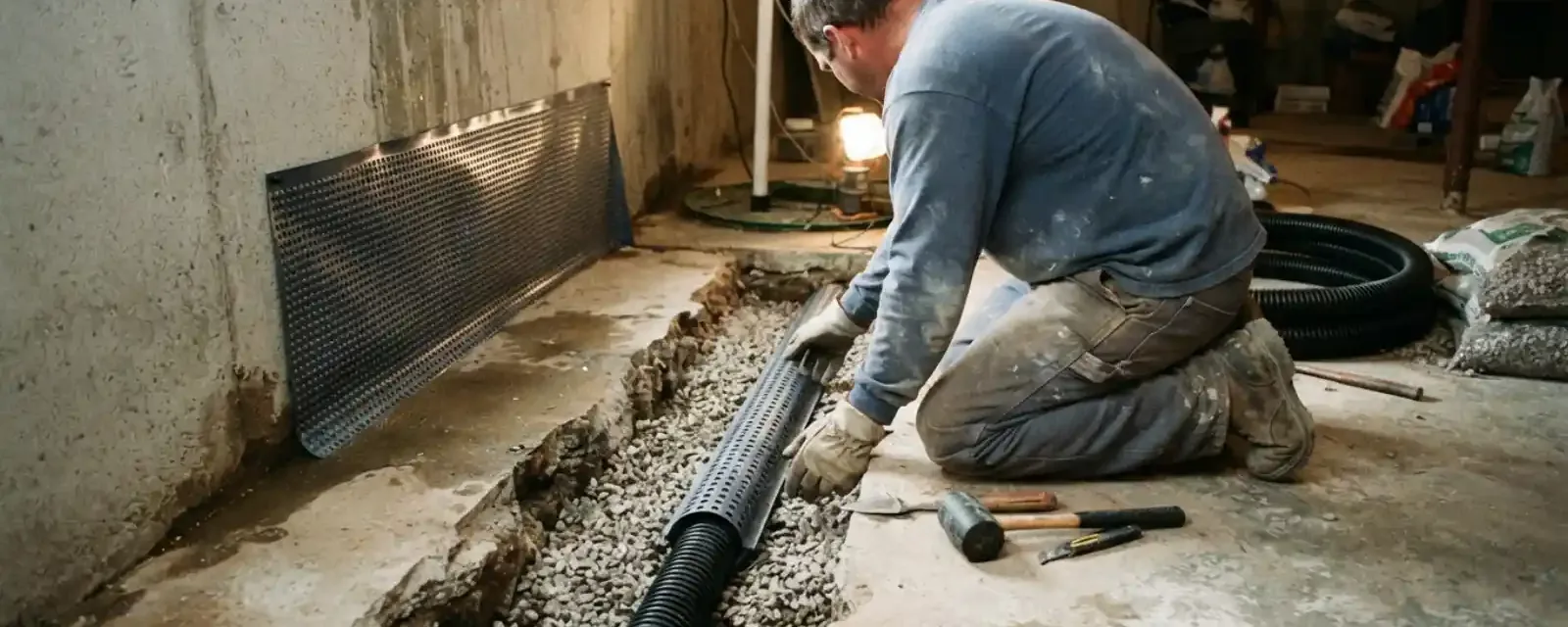
When groundwater is the cause, an interior drain channel along the footing can carry water to a sump pit, where a pump sends it outside. The pump, pit and discharge are plumbing. Our sump pump service page covers repair, replacement and battery backup.
Discharge needs care. Greater Lawrence Sanitary District guidance tells homeowners to make sure sump pumps and basement drains are not connected to the sanitary sewer. Massachusetts code, 248 CMR 10.15, requires an accessible check valve on sump discharge piping, and plumbing work that is replaced or repaired needs a permit, so ask the local plumbing inspector.
Floor paint and sealers are not a drain
Waterproof paint can slow vapor, but it does not stop water pushing through. Painted over a wet slab it often blisters. If paint is on your list, find the moisture source first and decide afterward.
Quick guide to who fixes what
| What you see | Likely cause | Who fixes it |
|---|---|---|
| Meter moves with fixtures off | Leaking supply line | Plumber, see leak detection |
| Wet floor drain, slow flow | Drain or sewer issue | Plumber, see drain cleaning |
| Pit full, pump not working | Pump or discharge fault | Plumber |
| Cracks and wet walls after rain | Foundation or grading | Masonry or exterior contractor |
| Sweating pipes in summer | Humidity | Dehumidifier or insulation |
Some basements have more than one cause at once.
What affects the cost of basement water diagnosis and plumbing work
We give a clear price before work starts.
Damp basement questions in Lawrence
Often it is groundwater seeping through, humidity condensing on cool surfaces, or a slow pipe leak behind a wall. A meter check and a look at the pipes helps tell them apart.
It is efflorescence, a mineral residue left when moisture moves through masonry and dries. It shows moisture exists but not where it starts, so find the source before cleaning it.
We do not do exterior excavation or perimeter French drains. We do connect interior drain channels to a sump pit, handle the pump and discharge, and refer exterior or masonry work to the right specialist.
A pump removes water that reaches the pit. It does not seal walls or fix grading. For many Lawrence basements it is one part of control, not a full cure.
It can help with minor vapor, but it often fails when water pushes from behind. Fix the source first.
Plumbing work that is replaced or repaired needs a permit from the local inspector. Ask the local plumbing inspector about your specific job.
The Massachusetts Division of Insurance says sump pump failure and sewer backup are excluded unless you add an endorsement. For seepage, ask your agent.