Basement floor waterproofing paint in Lawrence, MA is a masonry coating that sits on top of concrete and blocks light dampness and dust. It does not stop water that is pushing up through the slab or running in from a wall joint. If your floor only looks gray and chalky, paint can help. If you see puddles after rain, a white crust, or paint peeling in sheets, the water is still coming in.
This guide shows a simple test to run first, what the paint really does, and the signs that mean you should look at drainage or a sump pump instead.
What waterproofing paint actually does
Waterproofing paint is a thick, cement-based or epoxy-style coating rolled onto bare masonry. It fills tiny pores and forms a film. That film can slow vapor coming through dry concrete and makes the floor easier to sweep and mop.
It works from the inside face of the slab. Water pressure comes from the other side. When groundwater builds up under or beside the foundation, it can push on that film until the coating blisters, flakes, or lifts off the floor in patches.
So the honest label is surface treatment. It is a finish for a floor that is already dry enough, not a repair for a floor that leaks.
Run the plastic sheet test before you buy a bucket
A small test tells you more than any product label. Do it in dry weather first, then again a day or two after heavy rain.
Tape a square of plastic
Cut a piece of clear plastic about two feet on each side. Tape every edge to bare concrete with duct tape so no air gets under it.
Wait one to two days
Leave the sheet alone. Do not walk on it or move it. Check at the same time each day.
Look under the plastic
Droplets on the underside of the plastic usually mean vapor is rising from the slab. Wet concrete under the plastic with dry plastic on top often means water is moving through the floor.
Repeat after rain
A floor that tests dry in August can leak in a spring thaw. A second test after a long rain shows you the worst case.
When paint is a fair choice and when it is not
Use this side-by-side to decide whether a coating fits what you are seeing.
Paint can be reasonable
- The floor is damp-looking but never has standing water
- The plastic test shows only light condensation
- The concrete is clean, sound, and not crumbling
- You want an easier-to-clean utility floor
Paint will likely fail
- Puddles or wet edges appear after rain or snowmelt
- A white, powdery crust returns after you scrub it
- Old paint is bubbling, peeling, or lifting
- Water rises at the wall-to-floor joint or a floor crack
If the right column sounds familiar, adding more paint often traps moisture and speeds up peeling. Sorting out where the water enters comes first.
Water coming through the floor?
Describe what you see and when it happens. A licensed plumber can tell you whether it is a coating job or a drainage problem.
Match the symptom to the next step
Different signs point to different fixes. This table is a starting point, not a diagnosis.
| What you see | Likely meaning | Where to look next |
|---|---|---|
| Gray, dusty, dry slab | Surface wear | Clean, patch, then coat |
| Damp patches, no puddles | Vapor or light seepage | Plastic test, dehumidifier |
| Water at the wall joint after rain | Groundwater near the footing | Perimeter drainage, sump |
| Water in the pit or floor drain | Rising water table or drain issue | Sump pump, drain check |
| Sewage smell or gray water | Drain or sewer backup | Call a plumber at once |
Sewer backup is a health issue and is not a paint question.
Drainage and sump options, in plain terms
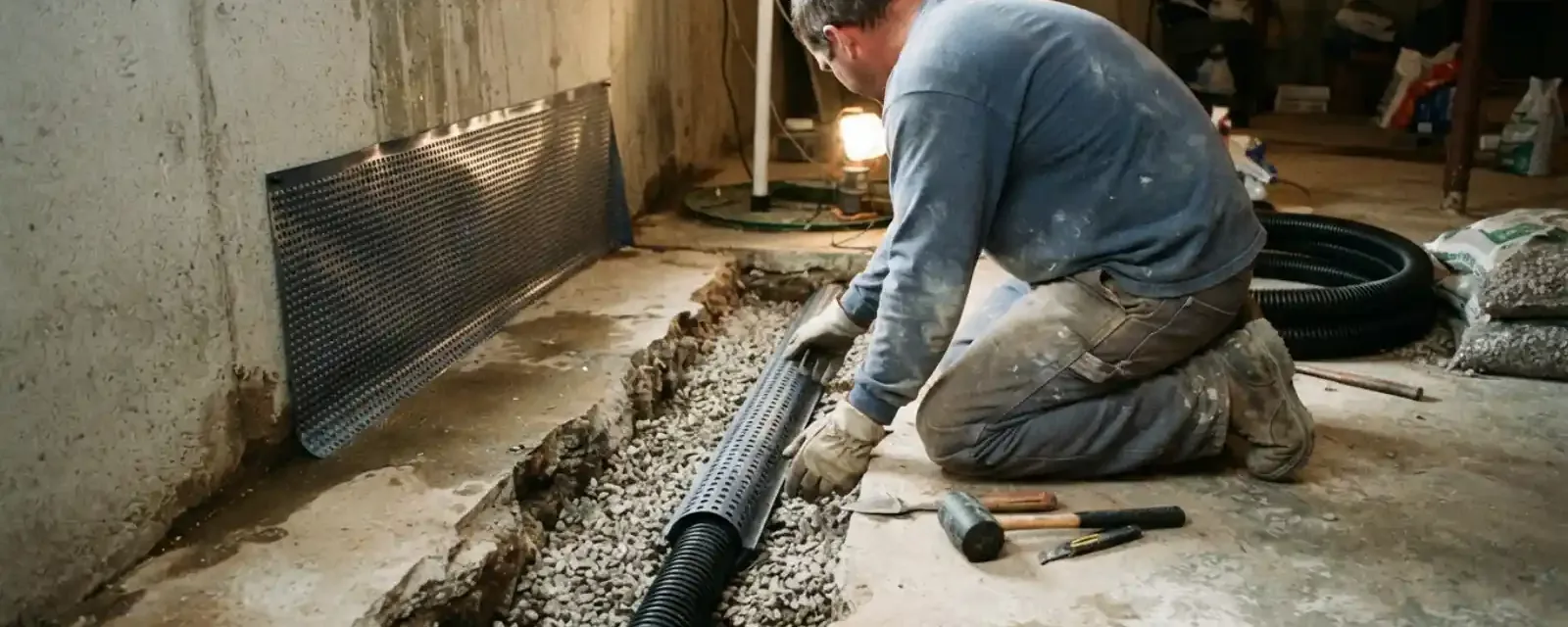
When water keeps returning, the usual answer is to give it somewhere to go. That can mean a sump pit that collects water and a pump that moves it outside, or interior drainage along the wall-floor joint that leads to that pit. Exterior grading and downspout extensions also matter and cost nothing to check.
A plumber can look at an existing pit, test the pump, and check that the discharge line runs away from the house. Our basement waterproofing page explains the drainage options, and the sump pump service page covers pumps, pits, and check valves.
The Greater Lawrence Sanitary District advises homeowners to keep sump pumps and basement drains out of the sanitary sewer, so ask where your drain goes before adding any. Massachusetts plumbing code requires an accessible check valve on sump and ejector discharge piping. Plumbing work like this needs a permit from the local inspector.
What Lawrence conditions mean for your slab
Lawrence's own housing plan notes the Arlington neighborhood flooded in 2001 and 2006, and over 17 percent of the city sits in 100 and 500-year floodplains. If you live in a low area near the Merrimack or the Spicket River, treat a damp floor as a possible drainage problem first and a paint job second.
Source type: City of Lawrence Housing Production Plan
If you decide to paint, prep it properly
Most coating failures come from skipped prep, not bad product. Work in dry weather with a fan running.
- Sweep and vacuum, then degrease any oil spots.
- Remove old peeling paint down to bare concrete.
- Patch cracks and pits with a masonry repair product.
- Confirm the floor passes the plastic test first.
- Apply thin coats and let each cure fully.
Never mix cleaning chemicals, and keep the space ventilated.
What drives the cost of a drainage fix
There is no honest number without seeing the space. These factors move the price most.
Basement floor paint questions in Lawrence
Not an active one. Paint can seal a dry or lightly damp slab, but it cannot hold back groundwater pressing from below. If water appears after rain, look at drainage or a sump before painting.
Run the plastic sheet test for a day or two, then again after heavy rain. Wet concrete under dry plastic, standing water, or a returning white crust means the floor is too wet to coat.
No. Remove loose paint down to bare concrete first, and find out why it lifted. Painting over a failing coating usually fails again within a season.
They solve different problems. A sump pump moves water out after it collects in a pit. Paint only finishes the surface. If groundwater is the problem, drainage and a pump come first.
It can be. The city's housing plan notes past flooding in Arlington and a large share of the city in floodplains. Low ground near the Merrimack or Spicket River often means more groundwater pressure, so test your floor after rain.