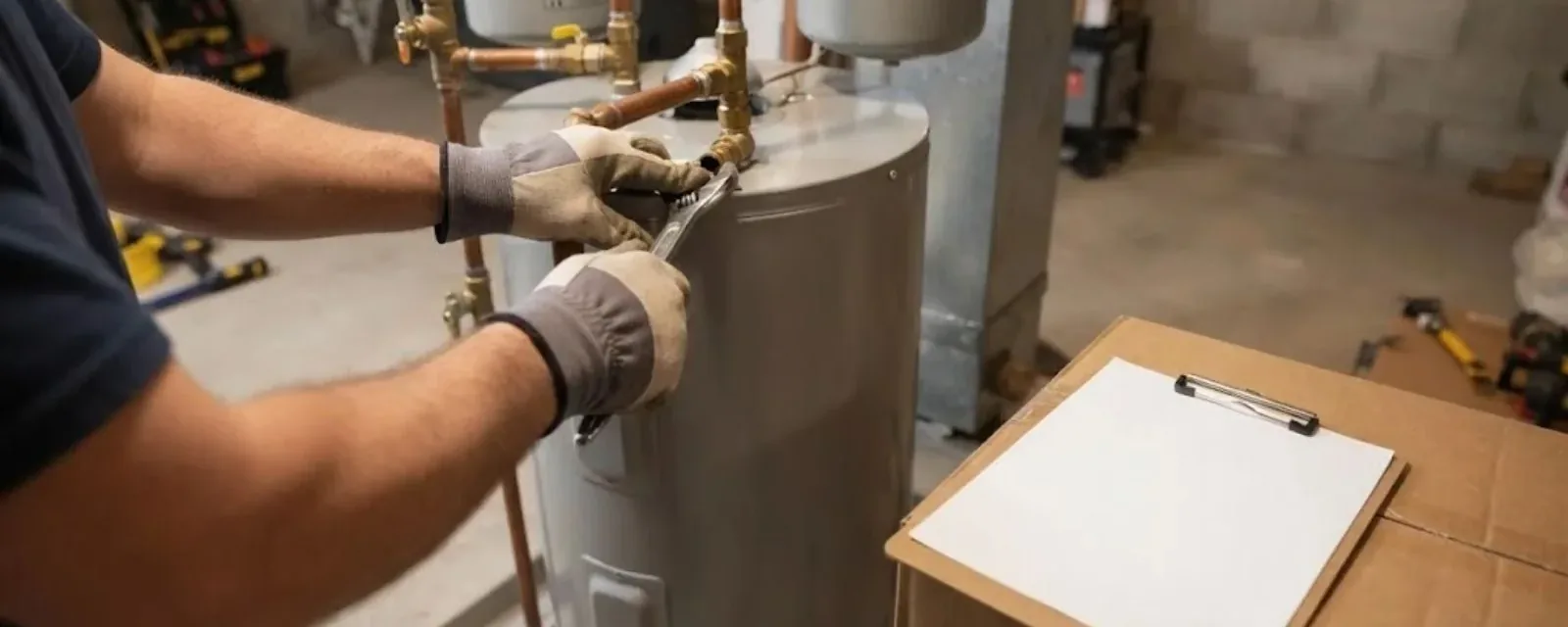
A recirculating pump for a water heater in Lawrence, MA keeps hot water moving through your pipes so it reaches distant faucets in seconds, not minutes. It is a small circulator that pushes cooled water in the line back toward the heater to be reheated. If you run a tap for a long time before it turns warm, you are the person this device is built for.
The pump is not free money. It uses electricity, adds standing heat loss, and works best when the piping suits it. This guide covers how it works, the types, and when to skip it.
The short version
A recirculating pump saves water and waiting, not necessarily energy. It is worth considering when the farthest bathroom or kitchen is a long pipe run from the heater, or when you have a multi-story house, an addition, or a two- or three-unit building with one heater.
It is less useful when the heater sits near the fixtures you use most. In that case, the wait is short already. A recirculating pump should be installed to the manufacturer's standards and the Massachusetts plumbing code, 248 CMR 10.00.
How the pump moves hot water
Without a pump, hot water sits in the pipe after you shut a tap. It cools, and the next time you open it, you flush that cold water down the drain before the new hot water arrives. Recirculation gives the water a loop to travel so the line stays warm or warms on demand.
There are two common layouts, and the layout matters more than the brand name.
Dedicated return line
A separate pipe runs from the farthest fixture back to the heater. The pump moves water around this loop. It is the cleaner design and is often found in newer homes or planned remodels. Older houses rarely have a return pipe already in place.
Comfort valve under the farthest sink
When no return pipe exists, a plumber can install a pump at the heater and a thermostatic valve under the farthest sink. The valve lets cooled hot water cross into the cold line, which then acts as the return. The trade-off is that your cold tap may run slightly warm at first.
Timer, thermostat, or on-demand
Pumps differ by how they decide when to run.
| Control type | How it works | Best for |
|---|---|---|
| Timer | Runs at set hours | Predictable schedules |
| Thermostat | Runs when the line cools | Steady comfort, higher use |
| On-demand button | Runs when you press a button or a sensor trips | Lowest energy, quick wait |
| Built-in tankless loop | Some tankless units include one | Check the unit manual |
Ask which control suits your daily routine before choosing hardware.
Want faster hot water?
Tell us where the heater sits and which faucet takes the longest. We will explain what a pump setup would involve.
Is it worth adding one
Here is a fair look at both sides.
Reasons to add
- Long waits for hot water at far fixtures
- Less water poured down the drain while waiting
- More comfortable showers on upper floors
- Useful in multi-unit buildings with one heater
Reasons to skip
- Heater sits close to every fixture
- Constant running adds electric use and heat loss
- Cold lines may run warm with a comfort valve
- Old, scaled pipes may need attention first
A tank heater already loses a little heat. A pump that runs all day pulls more from the heater, so a timer or demand switch often makes more sense.
What to know before the install, and who may do it
Adding a pump means cutting into hot and possibly cold lines, adding valves, and wiring or plugging in a small power supply. In Massachusetts, plumbing work that is installed, altered, or replaced needs a permit from the local inspector, and it must be done by a licensed plumber.
The state caps residential hot water at 130 F, and a circulation loop does not change that. Hot water in a loop can be hotter at the tap sooner, so a plumber checks the heater setting at the same visit.
If your heater is old, the pump visit is a good time to look at it. Our water heater repair page covers common faults, and the plumbing installation page explains new fixtures and piping work.
What Lawrence water means for a circulation loop
Lawrence's latest Consumer Confidence Report does not list water hardness, pH, or alkalinity. That matters because mineral scale can build on heater elements, valves, and small pump parts over time. Since the report is silent, a home test kit or a lab test tells you more about your own tap.
If scale is a worry, ask your plumber how the pump wetted parts handle minerals, and plan on checking the heater tank during any service visit.
Source type: Lawrence Consumer Confidence Report
What affects the price of adding a pump
A real number depends on the house, but these five factors drive most of it.
Recirculating pump questions in Lawrence
It can cut the water you run while waiting for heat, which helps the water and sewer line on your bill. It also adds electric use, so the net saving depends on your usage and the pump controls.
Not always. A comfort valve under the farthest sink lets the cold line act as a return. A dedicated return line is cleaner but harder to add in an older home.
Many can, and some models include recirculation as a feature. Check the unit manual or ask your plumber before adding one, since wrong pairing can cause short cycling.
No. Plumbing work in a home must be done by a licensed plumber with a permit from the local inspector. Only minor leak repairs and clearing a clog are permit-free.
Possibly. The city's annual report does not list hardness, so test your tap. Scale can wear small parts over time, which is worth raising with your plumber.