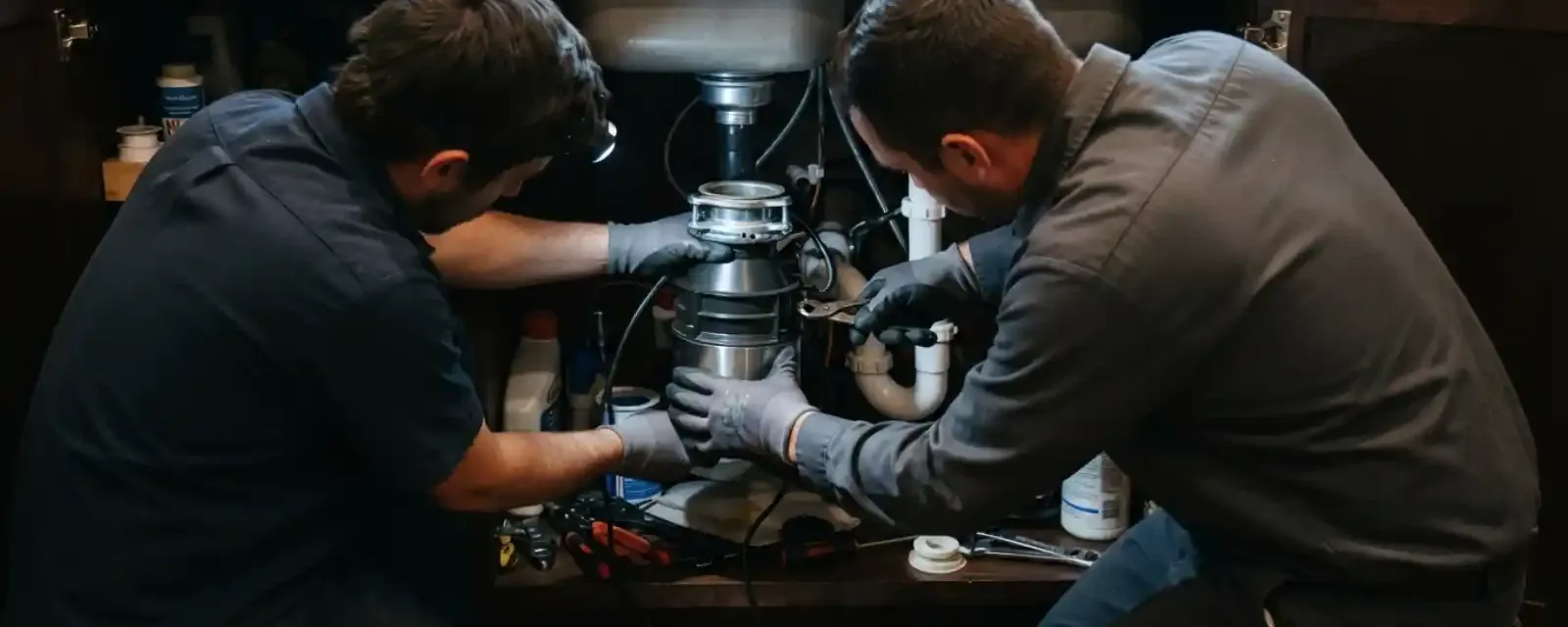
Garbage disposal installation in Lawrence, MA means mounting a grinder under your kitchen sink drain and connecting it to the trap, the dishwasher hose and a switched power source. A straight swap of one unit for another takes a licensed plumber a short visit. A first-time install, where there was never a disposal, takes longer because the drain and power may need changes.
Below is how to pick a unit, what the job involves from start to finish, which parts are not DIY in Massachusetts, and what Lawrence kitchens in older buildings tend to throw in your way.
Pick the unit before you pick the plumber
Three choices matter more than the brand name on the box.
Horsepower
Smaller motors handle light scraps for one or two people. A larger motor jams less often in a busy household that cooks daily.
Continuous feed or batch feed
Continuous feed runs while a wall switch is on. Batch feed runs only when a stopper is twisted in, which some households prefer around kids.
Grinding stage and noise
Extra insulation and a multi-stage grinder make the unit quieter and smoother, at a higher purchase price.
Mounting style
Some mounts go into the same sink flange as the old unit. Others need a new flange, which affects how much work the swap takes.
Whichever model you choose, keep the box, the manual and the date of purchase. Warranty terms live with the maker, not with the installer.
What an install usually involves
A licensed plumber typically works through the job in this order.
Shut off power and clear the cabinet
The electrical supply to the old unit is turned off at the panel and confirmed dead before anyone touches the wiring.
Remove the old unit or fit a new flange
The previous disposal comes off its mounting ring. If this is a first-time install, the drain opening and sink flange are fitted for the new mount.
Connect the drain and dishwasher line
The discharge elbow ties into the trap. If a dishwasher drains through the disposal, its hose is attached to the side port after the plug knockout is removed.
Wire, test and check for leaks
Power is reconnected, the unit runs with water, and every joint is checked dry before the cabinet is loaded again.
The part that is not a weekend project in Massachusetts
Massachusetts requires plumbing work in a home to be done by a licensed plumber under a permit. The exceptions are minor leak repairs and clearing a clog. There is no homeowner exemption in the state board's fact sheet. Whether a disposal swap needs its own permit is a question for the local plumbing inspector, so ask before assuming either way.
The wiring is its own issue. A disposal needs a switched power supply, and a first-time install may need a new outlet or switch. That is electrical work for a licensed electrician, and this page does not teach it. Do not power the unit until the connections are checked. Installation should follow the manufacturer's installation standards and the Massachusetts plumbing code, 248 CMR 10.00.
Ready to add or swap a disposal?
Call and tell us what is under your sink now. A licensed plumber can say what the job involves before you buy a unit.
What Lawrence's sewer system means for what you grind
Lawrence maintains 137 miles of sanitary and combined sewer mains, and the property owner owns the lateral running from the house to the street. A disposal sends ground food into that pipe. Grease and starchy scraps tend to settle in a lateral, so keeping them out of the unit protects a pipe that is your expense, not the city's.
The city's public documents also stress that the owner is responsible for the lateral, and that sewer overflows along the Merrimack and Spicket Rivers are a known concern. In practice, treat a disposal as a helper for small scraps and keep grease, bones, coffee grounds and fibrous peels out.
Source type: City of Lawrence Water & Sewer Department public documents
Older kitchens, older drains
Lawrence has many older buildings, including multi-unit homes where a kitchen sink shares a stack with other units. Pipe material by era is not documented, so the condition of the trap, the drain arm and the wall connection is something a plumber should look at before bolting a grinder to it.
A disposal adds weight and vibration under the sink. If the drain arm is corroded or the cabinet floor is soft from past leaks, the new unit can loosen connections. It is cheaper to replace a tired trap during the install than to chase a leak a month later.
Landlords and renters
If you rent, ask the landlord before installing anything, and have the work done by a licensed plumber. A tenant-installed disposal that leaks can damage the unit below.
Septic properties nearby
Some properties in nearby towns use septic systems. If yours does, ask your septic professional before adding a disposal, since extra solids can load a tank.
Replace, repair or skip the disposal
A disposal that hums but does not spin is not always a replacement job.
| Problem | Often a repair | Often a replacement |
|---|---|---|
| Hums, will not spin | Jam cleared from the bottom | Motor burned out after repeated jams |
| Leaks at the top | Flange seal or gasket redone | Housing is cracked |
| Leaks at the bottom | Not usually | Seals have failed inside the unit |
| Slow draining sink | Trap or drain arm cleared | Not related to the disposal |
| Very loud grinding | Foreign object removed | Worn grinder parts on an old unit |
Never put a hand into the disposal. Switch it off at the wall and use tongs or a hex key as the maker directs.
What shapes the cost of a disposal install
The unit is only part of the bill. These factors move the total.
Disposal installation questions in Lawrence
Only with the landlord's approval, and the work should be done by a licensed plumber. A leak under a second-floor sink in a multi-family building damages the unit below, so a clear agreement matters.
Massachusetts treats plumbing work that is replaced or repaired as permit work, with minor leak repairs and clearing a clog as the exceptions. For this exact job, ask the Inspectional Services plumbing inspector at 978-620-3130.
Many kitchens route the dishwasher hose to a side port on the unit so both share one trap. The knockout plug inside that port must be removed during install, or the dishwasher cannot drain.
Grease, oil, bones, coffee grounds, pasta, rice and fibrous peels. These settle in the lateral, which is the owner's pipe, and they are a common cause of repeat backups.
Not always. A jam often clears from the bottom with a hex key as the maker directs, after switching the unit off. If it keeps jamming, the motor may be worn.