If you smell gas, leave the building now. Call 911 from outside, then the gas utility, before you call any plumber. That rule comes first on this page and it does not change.
Boiler repair in Lawrence, MA covers the system that heats your radiators or baseboards, from a leaking fill valve to a stalled circulator. Our 24/7 dispatch line takes no-heat calls. While you wait, close off unused rooms and keep tenants or family in the warmest space.
Gas smell: what to do before anything else
Do not flip switches, use a phone inside, or look for the source. Get everyone out, call 911 from outside, and then call the gas company. Mass.gov guidance lists Eversource Gas at (800) 525-8222. We cannot and will not promise a gas response time, because that call belongs to the utility and emergency crews.
The September 2018 Merrimack Valley gas incident left 131 structures damaged and one death in Lawrence, per the NTSB. The practical point: a gas smell is never wait-and-see. Work on the water side of a heating system follows the Massachusetts plumbing code, 248 CMR 10.00, while gas fitting and oil burner work fall under their own licensing standards.
The house is cold, the radiators are silent or the pipes bang
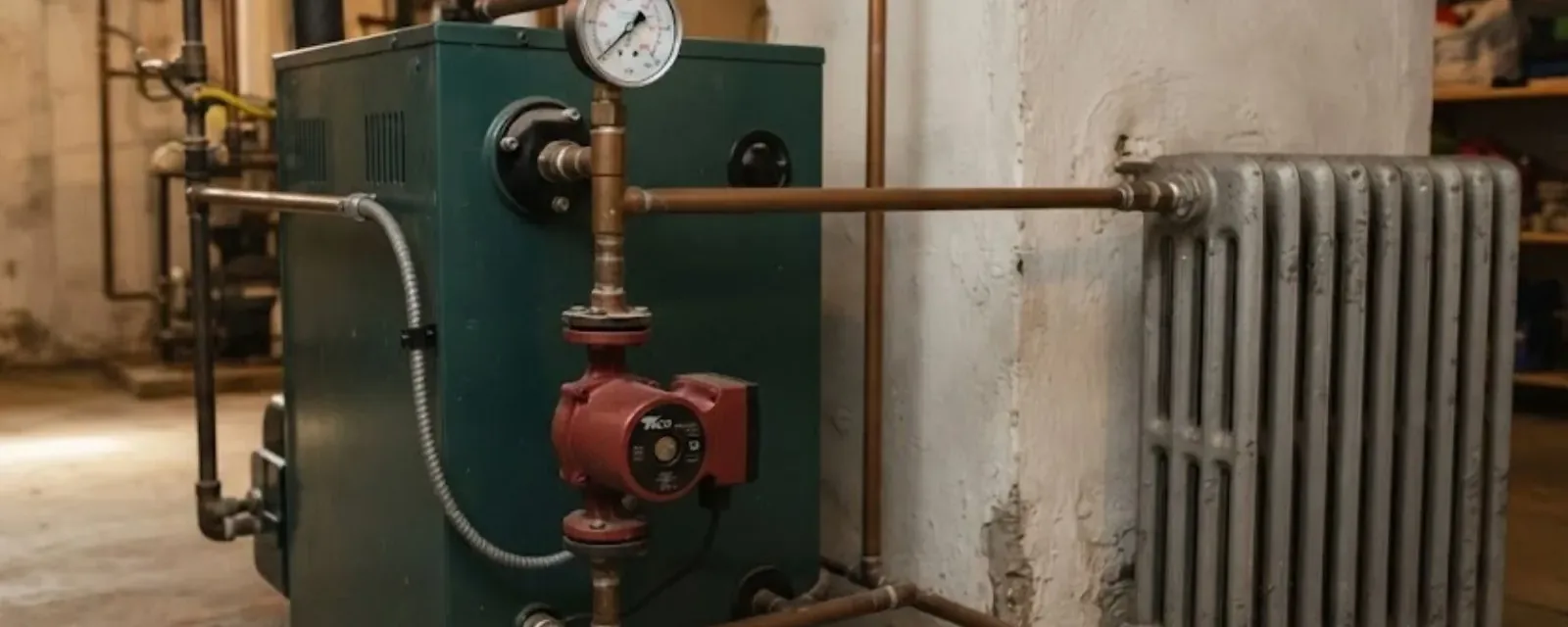
Most boiler calls begin with a symptom. Radiators stay cold, a puddle forms beneath the unit, the pressure gauge drops to zero, or the pipes knock when the heat comes on. The system could be short of water, airlocked, or fighting a failed part.
The technical name for the fix is boiler repair. Many of these faults are on the water side of the system, which is where a plumber works, rather than inside the burner.
When no heat is an emergency
No heat is urgent in a Lawrence winter. The January average low is 19.6 F, and pipes in an unheated building can freeze. Ask for a same-day or after-hours visit when the house cannot hold a livable temperature, when water is leaking from the boiler, or when there are elderly people, infants or anyone ill inside.
Landlords have a legal duty here. Massachusetts sanitary code 105 CMR 410.180 requires heat of at least 68 F from 7 a.m. to 11 p.m. and 64 F overnight, from September 15 to May 31. If you rent, tell your landlord in writing, and ask the local health department if heat stays out.
No-heat winter checklist while you wait
These steps protect the house and the pipes until a technician is on site.
Hold heat in
Close doors to unused rooms, draw curtains at night and gather everyone in one space.
Check the basics
Confirm the thermostat is on heat, the batteries are fresh and the emergency switch near the boiler was not turned off.
Protect pipes
Open cabinet doors under sinks on exterior walls and let a faucet drip. City guidance says to keep the thermostat at least 55 F.
Do not use an oven or grill
Never heat a home with a gas oven, charcoal or a camp stove. Carbon monoxide can build quickly.
No heat and not sure why?
Call the dispatch line, describe the gauge and the sounds, and we will tell you what can wait.
Signs the problem is in the water side of the boiler
These faults often involve plumbing, not the burner.
- Water on the floor around the boiler or under a relief valve.
- Pressure gauge reading near zero, or climbing too high.
- Radiators warm at the bottom and cold at the top, which can mean trapped air.
- Hammering or kettle-like noises when the system starts.
- One zone cold while others heat, often a zone valve or circulator problem.
How the problem gets found
We check the safe, simple things first.
Read the gauges
Pressure and temperature tell us whether the system is short of water or overpressured.
Look for leaks
We inspect fittings, the fill valve, the relief valve, the expansion tank and piping for drips and corrosion.
Test the pumps and valves
We check that circulators and zone valves open, close and move water.
Sort the system by fuel
If the fault is in gas or oil equipment, we tell you which licensed tradesperson should take it.
What a plumbing license covers and what it does not
Massachusetts plumbing code does not govern heating systems beyond the direct connection to the potable water supply. Gas boiler piping, venting and connections are licensed gas fitting work and need a gas permit. Oil burners are worked on by state-certified oil burner technicians, so a plumbing license alone does not cover oil burner work.
Boilers in private residences are exempt from state boiler inspection, so regular service is up to you. You can verify any plumber's or gas fitter's license in the state's eLIPSE system on Mass.gov.
Gas line inspection and gas leak calls
Gas work is separate from water work. If a gas appliance needs a line moved, a gas line tested or a connection checked, that is licensed gas fitting work done under a permit from the local inspector. Ask the local plumbing inspector which permit applies.
If you suspect a leak, follow the safety rule at the top first. Once the utility clears the home, we can explain which repairs fall to a licensed gas fitter. For planned work see our plumbing installation page.
Repair or replace the boiler
Age, parts and efficiency all matter.
Repair is usually reasonable when
- The fault is a valve, pump, gauge or leaking fitting.
- The boiler heats well otherwise.
- Parts are available.
Replacement is worth discussing when
- The heat exchanger or a cast section leaks.
- Repairs are frequent and expensive.
- The system is oversized or inefficient.
Mass Save lists heating rebates. Check current rules on masssave.com before buying.
Why Lawrence buildings test a boiler harder
About 72% of Lawrence housing units are renter-occupied, and 28% sit in three or four unit buildings. A single boiler failure can leave several households cold, so tenants and owners should document the outage and call early.
The city does not take responsibility for a customer's frozen service line, so a cold building also carries a water risk. For frozen pipes, see our burst pipe repair page and water heater repair if hot water is also out.
Source type: City of Lawrence Housing Production Plan
What affects the price of boiler repair
We give a clear price before work starts.
Boiler and no-heat questions from Lawrence homes
Our dispatch line is open 24/7 and takes no-heat and leaking-boiler calls at any hour. We do not promise an arrival time. If you smell gas, leave and call 911 and the gas company first.
No, not first. Leave the building, call 911 from outside, then call the gas utility. Call us only after the utility has made the home safe.
Oil burner work requires a state-certified oil burner technician, and a plumbing license does not cover it. We can handle water-side problems and refer burner work.
Under 105 CMR 410.180, heat must be at least 68 F from 7 a.m. to 11 p.m. and 64 F overnight, September 15 to May 31. Put complaints in writing and contact the local health department.
Boilers in private residences are exempt from state boiler inspection under 522 CMR 4.05. That is why regular service is up to you.
A slow leak, a faulty fill valve, or a failing expansion tank can all drop pressure. A plumber can test each part.